Residential moving in Denver.
Local moves for apartments, condos and houses across the Denver metro. Clear inventory, protected floors and a crew that sets everything where you want it.
How a local Denver move is priced
Most local moves are priced by the hour for a crew and a truck. The meter runs from the time the crew starts loading to the time the last item is placed, and it usually includes drive time between addresses. That is why two homes with the same bedroom count can produce very different bills. Time follows access and inventory, not square footage.
Three inputs move the number more than any others: how many people are on the crew, how many hours the job takes, and what extra charges apply. Those extras, called accessorial charges, cover things like long carries, stairs, bulky items and packing materials. A written estimate should list each one by name.
| Home size | Typical crew | Planning hours | What drives the range |
|---|---|---|---|
| Studio | 2 movers | 3 to 4.5 | Elevator wait, parking distance |
| 1 bedroom | 2 movers | 4 to 6 | Stairs, number of boxes |
| 2 bedrooms | 3 movers | 5.5 to 8 | Heavy furniture, garage contents |
| 3 bedrooms | 3 movers | 7.5 to 11 | Basement, patio and storage items |
| 4+ bedrooms | 4 movers | 10 to 15 | Volume, multiple floors, specialty items |
The hours above are planning assumptions used by our cost estimator, not a guarantee. A walkthrough replaces them with numbers based on your actual inventory.
What to do before the crew arrives
The cheapest hour on any move is the one that never happens. Most avoidable hours come from the same six problems, and all of them can be solved the day before.
- Reserve the parking. A truck parked a block away turns every trip into a hike. If your street is tight, check with your city or HOA about temporary loading space.
- Book the elevator. Condo and apartment buildings often restrict move hours and require elevator padding. Ask the manager for the rules in writing.
- Clear the path. Doors propped open, hallways empty, pets in a closed room, rugs rolled.
- Disconnect what needs disconnecting. Washers need to be drained, refrigerators emptied and defrosted, and gas appliances shut off by someone qualified.
- Set aside the irreplaceable. Documents, medication, jewelry and chargers ride with you, not on the truck.
- Label by destination room. Write the room on two sides of every box, not what is inside. The crew places boxes by room.
Stairs, elevators and tight access
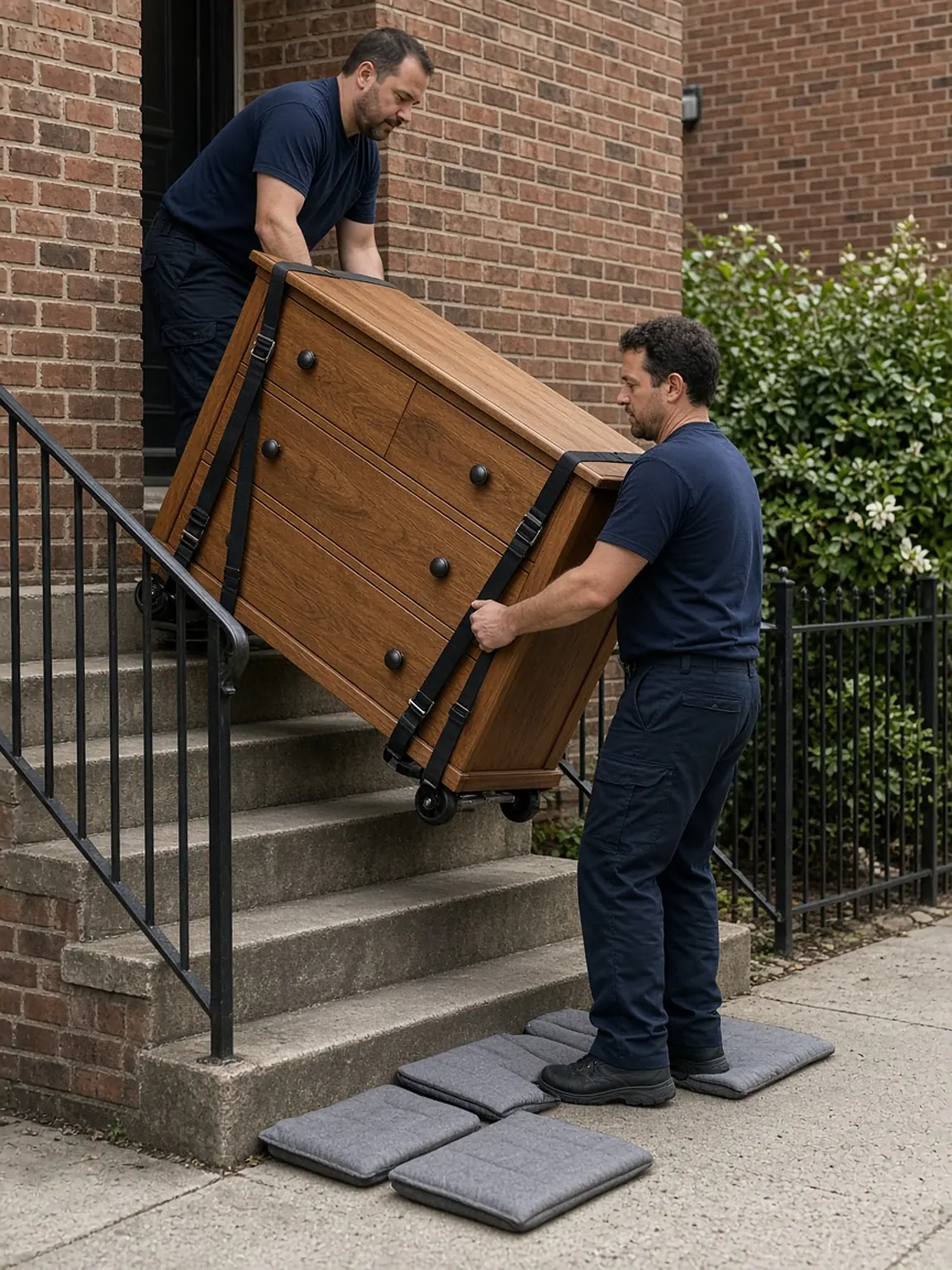
Access problems show up in three forms: vertical (stairs and elevators), horizontal (long carries from door to truck) and geometric (narrow turns, low ceilings, tight stairwells). Each one adds time, and each one is cheaper to disclose early than to discover on moving day.
Denver specifics worth knowing
Older Denver bungalows and Victorians often have narrow interior stairs and steep porch steps. Newer townhomes and condos often have elevators with scheduled windows. Mountain-adjacent neighborhoods can mean steep driveways, and winter ice can slow every carry. Mention which category you are in when you call.
Protecting floors, furniture and doorframes
Damage rarely comes from one dramatic mistake. It comes from a corner that brushed a doorframe or a table leg that dragged across hardwood. Prevention is a set of habits applied to every piece, every trip.
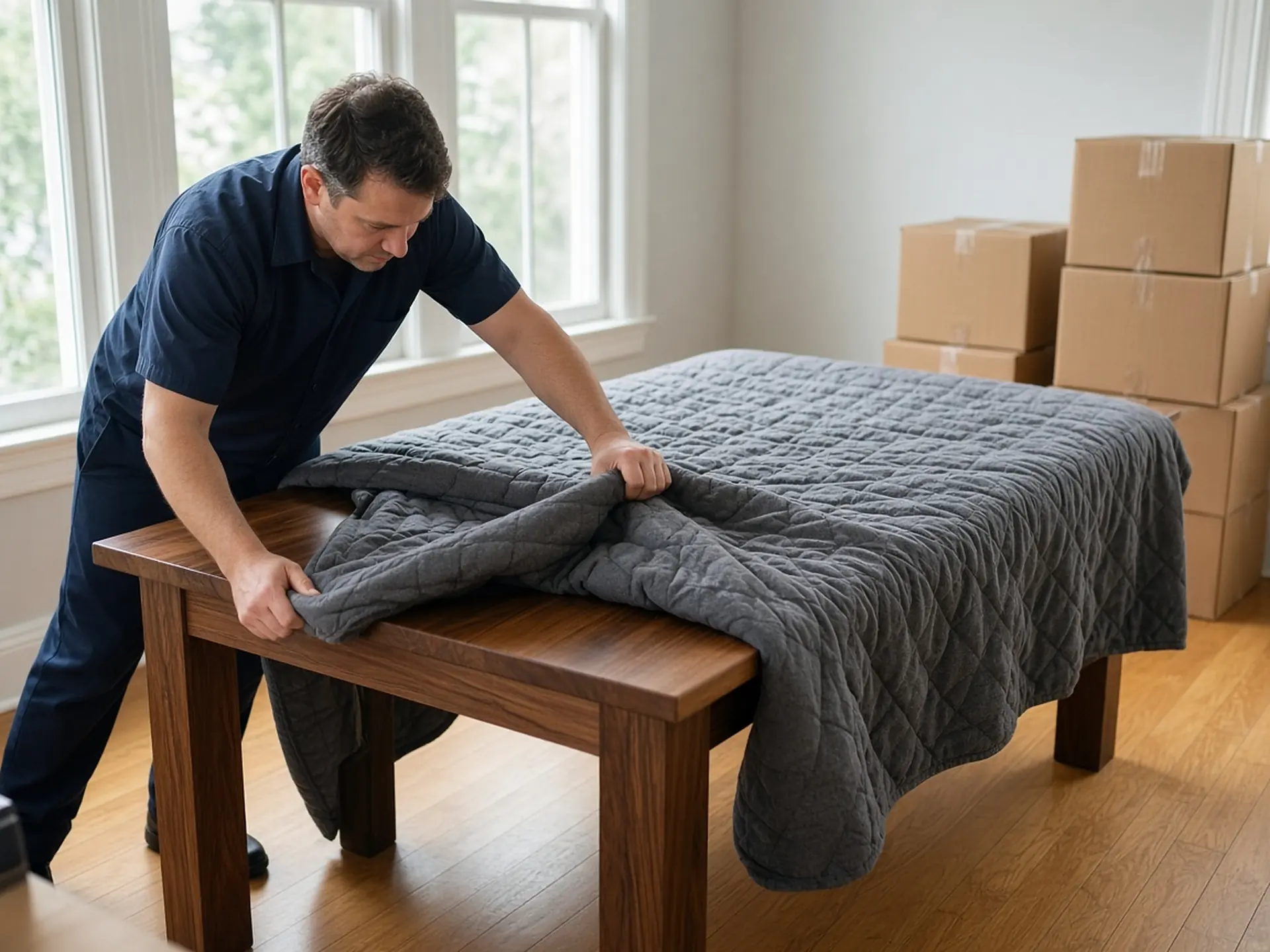
- Furniture pads go on every finished surface before it is moved, and stay on until it is placed.
- Floor runners and corner guards protect hardwood, tile and door jambs along the route.
- Mattress and sofa covers keep fabric clean during loading.
- Straps and rails hold the load against the truck wall so nothing shifts on the drive.
- Disassembly of beds, tables and shelving reduces the surface that can be hit.
Ask any mover what they use for floors and how they secure the load. A confident answer is a better sign than a promotional one.
Matching the move to your situation
Use the logic below as a first pass. It will not replace a walkthrough, but it will point you toward the right questions.
Your move is under 10 miles with elevator access
Plan on the low end of the hourly range and ask about minimum hours
You have a third-floor walkup or a long carry
Expect added time and ask for the access charge in writing
You are moving a piano, safe or gun safe
Disclose it early and ask for a specialty handling line item
Your move and keys do not line up by a few days
Ask about short-term storage and delivery from storage
You are packing yourself
Finish boxing two days early so the crew is not waiting
The bottom line
What good preparation changes
Parking, elevators and cleared paths remove paid time before the crew arrives.
Measured paths and disclosed specialty items remove the surprises that cause damage.
A written estimate with named accessorial charges removes the arguments on moving day.
To start, use the moving cost estimator for a planning range, then send your route for a written estimate.
At a glance
Apartments, condos, townhomes and houses in the Denver metro
Crew size, hours, drive time and named extras
Written, from an in-person or video walkthrough
Next step
Moving day, planned.
Send the addresses and the rough size of the home. A person calls back to confirm details and schedule a walkthrough.